Pittsburgh Cemeteries

The Art and Architecture of Death

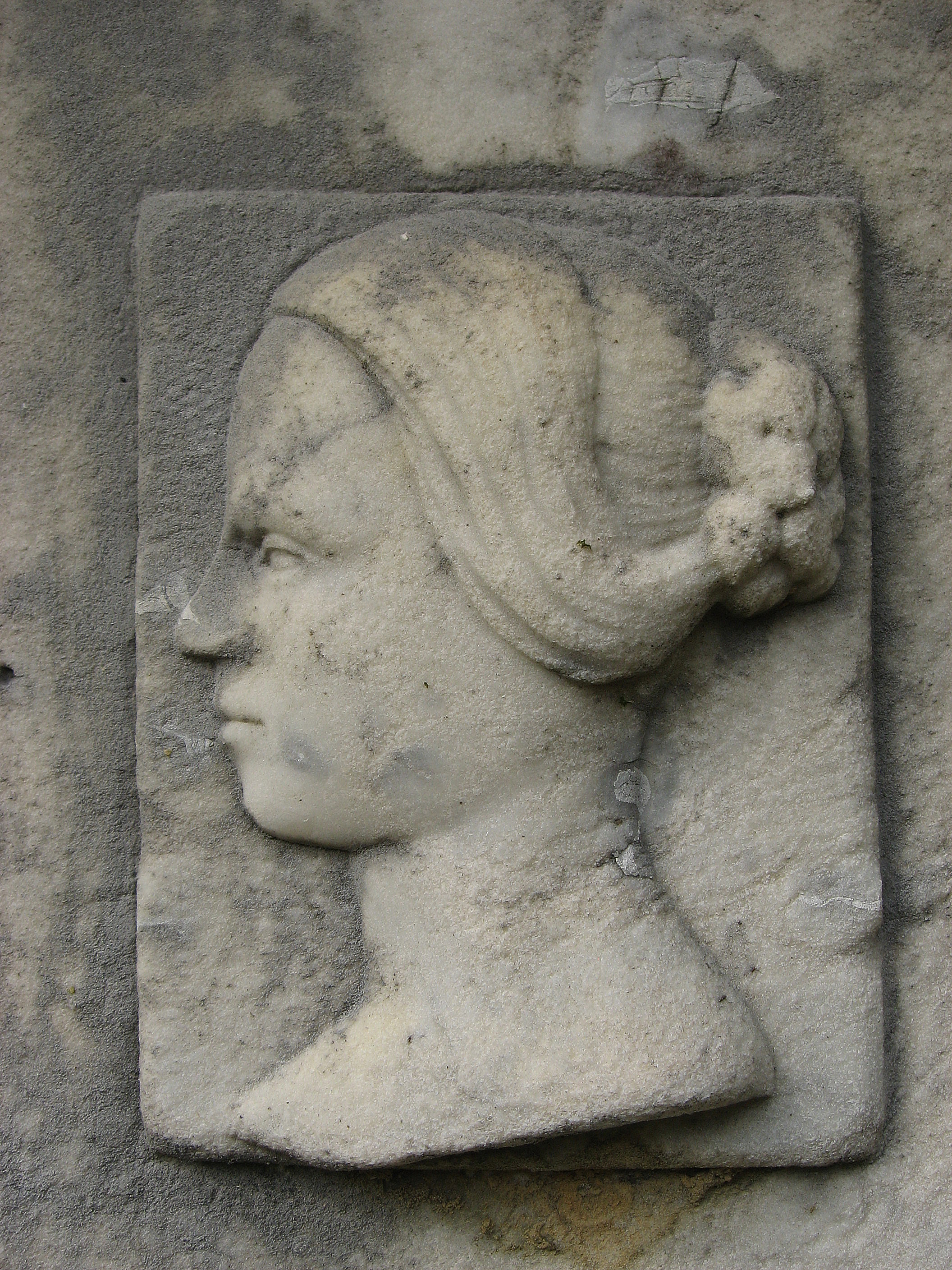
These matching monuments have been a little damaged by time, but still make an impressive pair. Mary’s has a profile vignette that looks as though it is meant for a portrait of the deceased. Small as it is, it is a fine piece of work.
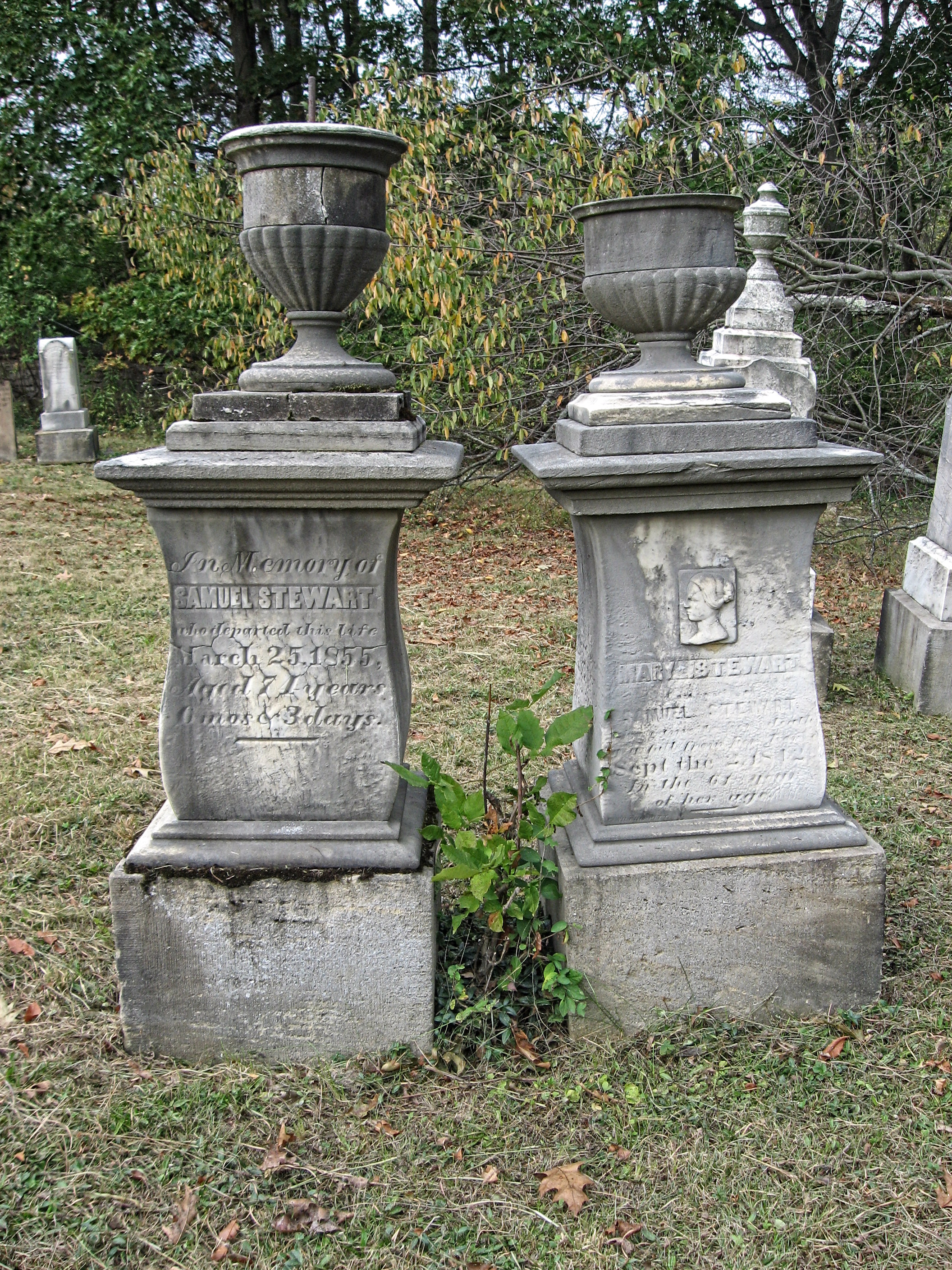
In Memory of
SAMUEL STEWART
who departed this life
March 25, 1855,
Aged 74 years
6 mos & 3 days.
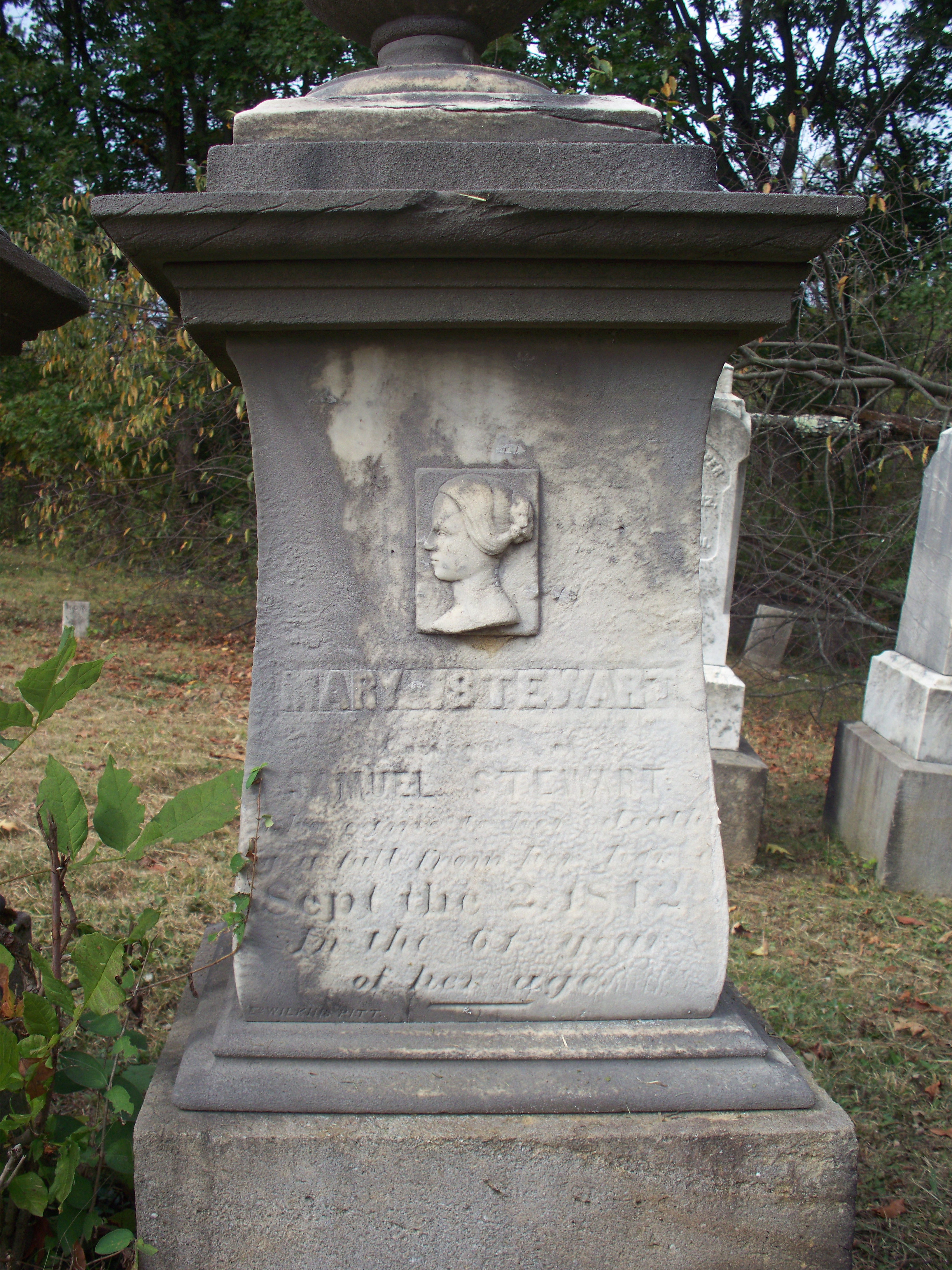
MARY STEWART
Consort of
SAMUEL STEWART
who — — —death
— — from — —
Sept. the 2, 1842,
In the 61st year
of her age

Father Pitt was not able to read the entire inscription. In fact Mary’s monument is covered with inscriptions on all sides, most of which seem from the form of them to be poems or hymns, but which have been made illegible by the gradual erosion of the marble. We can, however, read the signature of the artist: “Ed. WILKINS PITT.”

On the back of the monument is another profile, smaller and much more eroded than the one on the front:

Father Pitt suspects that it may represent a son who died in childhood.

Father Pitt is being a little facetious in bestowing the title “master” on this particular craftsman. He is not exceptionally good. We name him, as usual, from a readily identified feature of his style: he always carves the date in italic letters. And it is interesting to see his work in two different cemeteries, fairly far apart. Above, John Frew’s tombstone in the St. Clair Cemetery, Mount Lebanon. The unusual inset name is unique in what Father Pitt has seen of this craftsman’s work, and he suspects it represents, not an aesthetic decision, but an embarrassing correction of the deceased’s name. William Frew‘s, below, is more typical.
Now here are several tombstones in Hiland Cemetery, north of West View. Note that the name “Richey” or “Ritchey” is spelled two different ways, suggesting that John Frew’s tombstone is not the only one in his career where our artist misspelled a name.

A family plot with a romantic Gothic marble monument, now illegible but still grand in its way. It was once surrounded by an iron fence, but like almost all such fences it has been removed to make life easier for groundskeepers.

We can see where the iron fence once fitted into the stone gateposts.

Almost all the fences and barriers that used to demarcate family plots in the nineteenth century were removed in Allegheny Cemetery, but this one has somehow survived the loud protests of groundskeepers. You will note, however, that the groundskeepers seem to be deliberately avoiding the interior of the plot.

EDWARD H. KELLEY,
DIED
May 27, 1849,
In the 41 year
of his age.

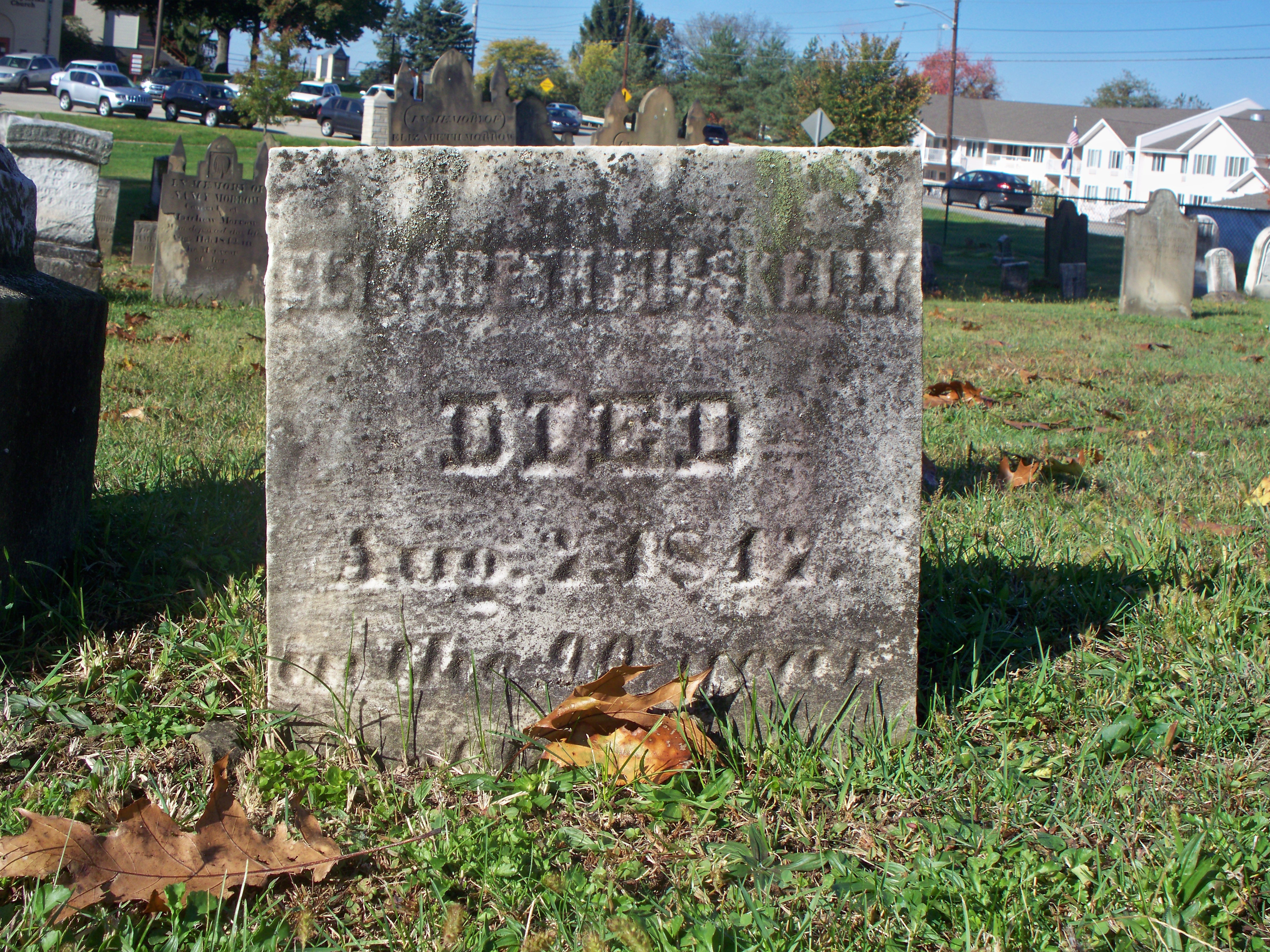
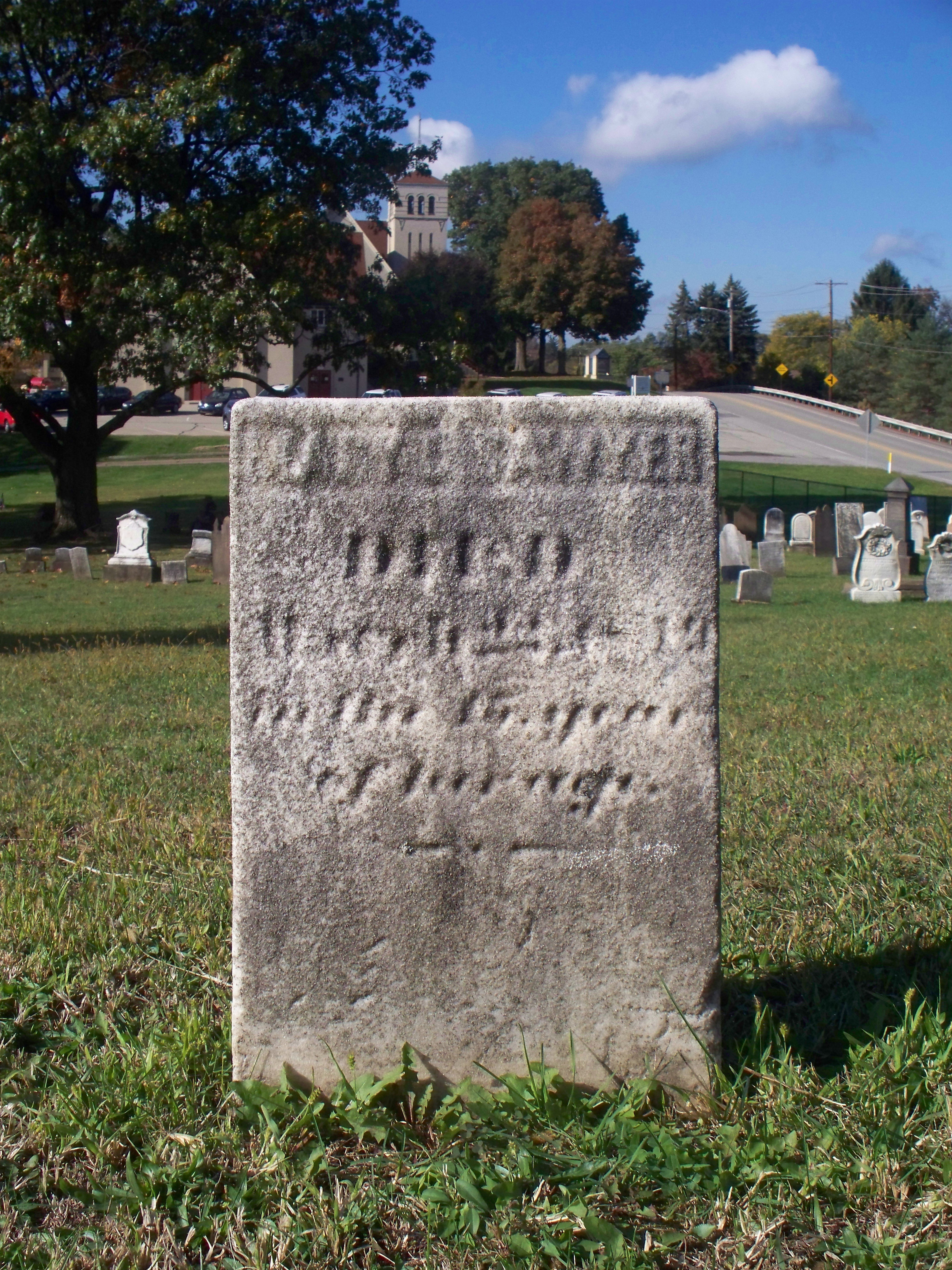
In the 1840s and 1850s the style of tombstone old Pa Pitt likes to call “poster style” became popular—a style that resembles printed posters of the time. The stone is usually limestone, which is soft and easily eroded; so that many of these stones are almost illegible now.

Bethel Cemetery has a good collection of poster-style tombstones, and this article will serve as a good introduction to the style.

ELIZABETH MISSKELLY
DIED
Aug. 7, 1847
in the 90th (?) year…
[the rest is buried]

HANNAH SAWYER
DIED
Nov. 2, 1849,
In the 19 year
of her age.

MARY D(?) SAWYER
DIED
March 22, 1849
In the 15 year
of her age.

ABAGAIL
Wife of
JOSEPH WOODS
died March 20, 1850,
in the 35 year of her age.

Also an Infant son…

Note the non-standard spelling “Abagail” and the stylized weeping willow.

MARY —?
daughter of
J. & A. WOODS
died Jan — 18—? Aged 1 year…

Died May 23, 1848
Mrs SARAH WOODS
WIFE OF
Mr. JOHN WOODS
in the 34 Year
of her age.

SARAH HICKMAN
DIED
Jan 18, 1848…

ANN,
wife of
THOMAS MORROW,
died July 26, 1849,
in the 37 year
of her age.

ELIZABETH, PA.

MARY,
WIFE OF
THOMAS MORROW
BORN
MAY 18, 1810,
DIED
MAY 26, 1858.

JAMES KIDDOO
DIED
Sep. 20, 1823
in the 61 Year
of his age.

We can see James’ wife Mary’s stone leaning against his; she died in 1847, and James’ stone was probably ordered at the same time as hers, since it is definitely in the style of the 1840s rather than the 1820s.

IN MEMORY OF
ROBERT LONG
Who departed this life
August 1st 1832 aged 60
years.
Go home dear friends
And cease from tears.
Here I must lie
Till Christ appears.


W. Savage, Sculptor, Williamsport.

We have seen another pair of tombstones in a similar style in the Bethany Cemetery near Bridgeville: the tombstones of Billingsley Morgan and his (illegible) wife, which were signed by H. Savage. Was H. Savage a brother or other relative of W. Savage? And if “Williamsport” means the only Williamsport Father Pitt knows of in Pennsylvania, then this stone was hauled across the mountains, which must have been quite expensive. Perhaps there was no one in the immediate area who could carve a stone of this quality in 1832—for it certainly is a splendid piece of folk art, well worth the trouble of hauling in from Williamsport.

—An update: Father Pitt has to confess his ignorance sometimes. Williamsport, he has discovered, was the name of the town that is now called Monongahela. The name is remembered in the Williamsport Road, which leaves Elizabeth and heads straight for Monongahela before changing its name to Rostosky Ridge Road, which is probably not the early settlers’ name for the trail, about two-thirds of the way along.

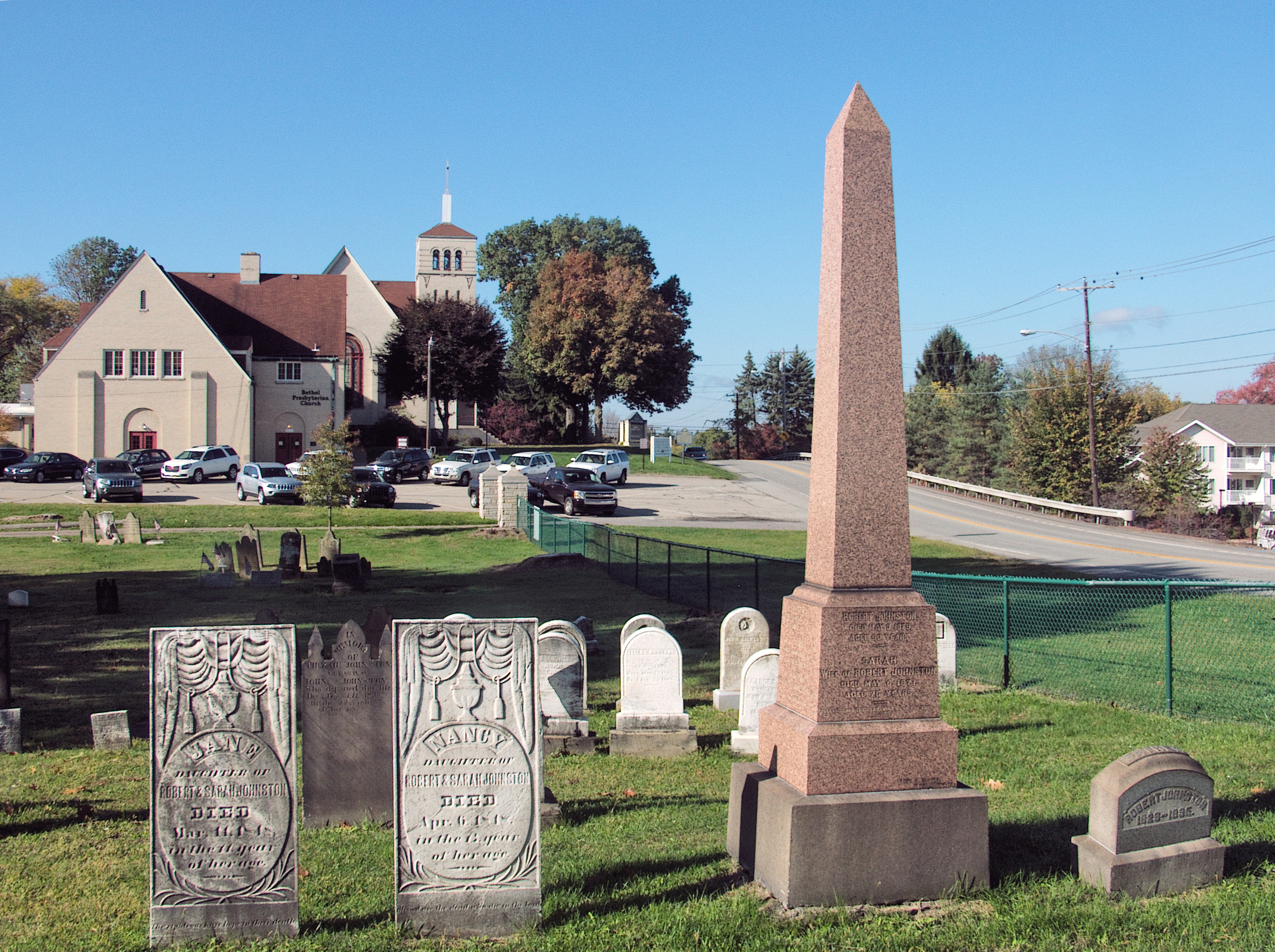
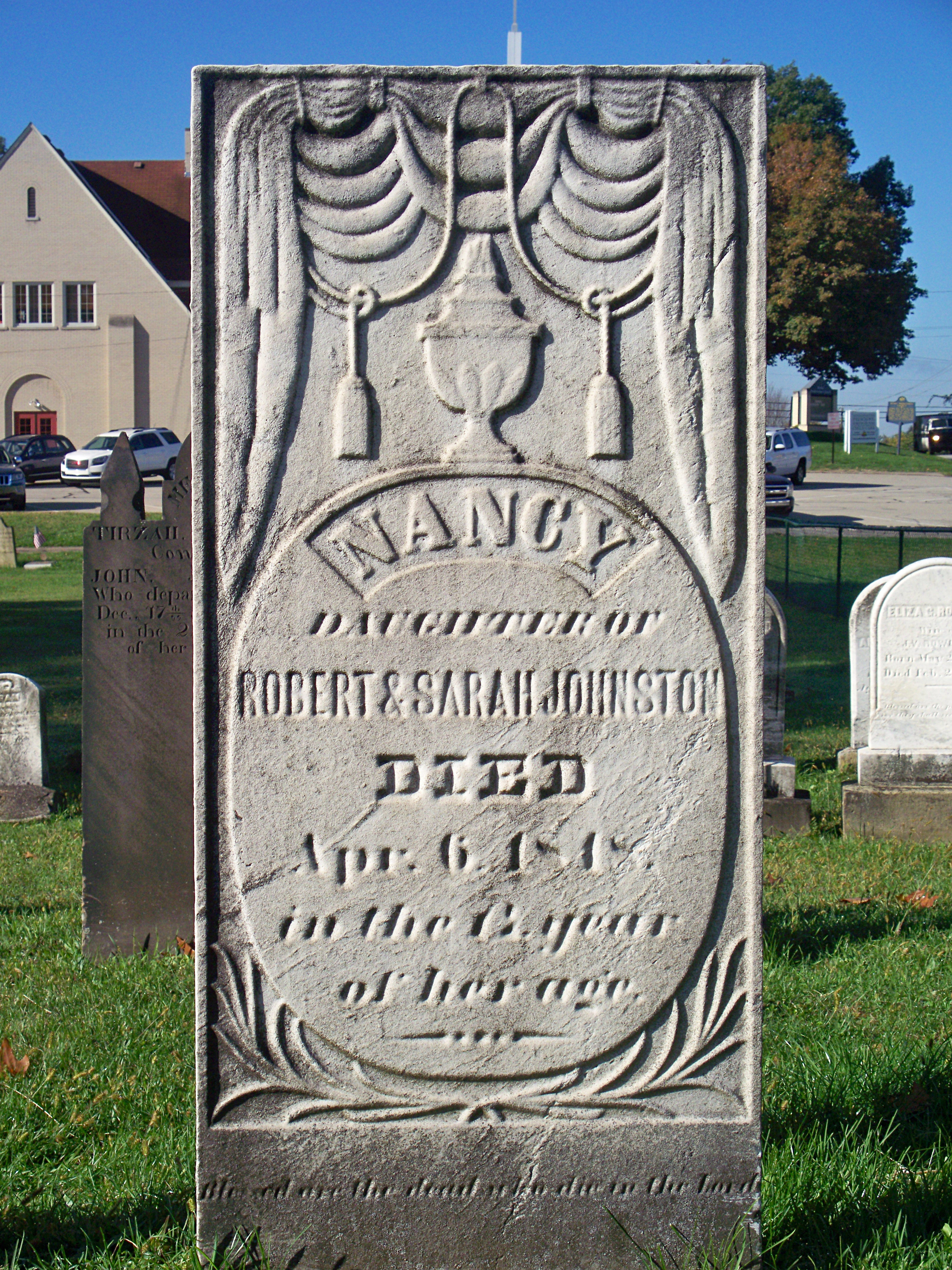
Robert and Sarah Johnston had two daughters who died within weeks of each other in 1848, doubtless of the same disease. Each was given a splendid tombstone in the engraved-title-page style that was popular for expensive tombstones in the 1840s.

Robert and Sarah themselves got this rich pink obelisk. Their son Robert and his wife are buried next to them.

A typical Doric cube of the early twentieth century. The stained glass is rather good. Charles A. Brooks was interred here in 1906, and Anna Cloyde Woodward Brooks in 1931; according to cemetery records, they are the only residents.

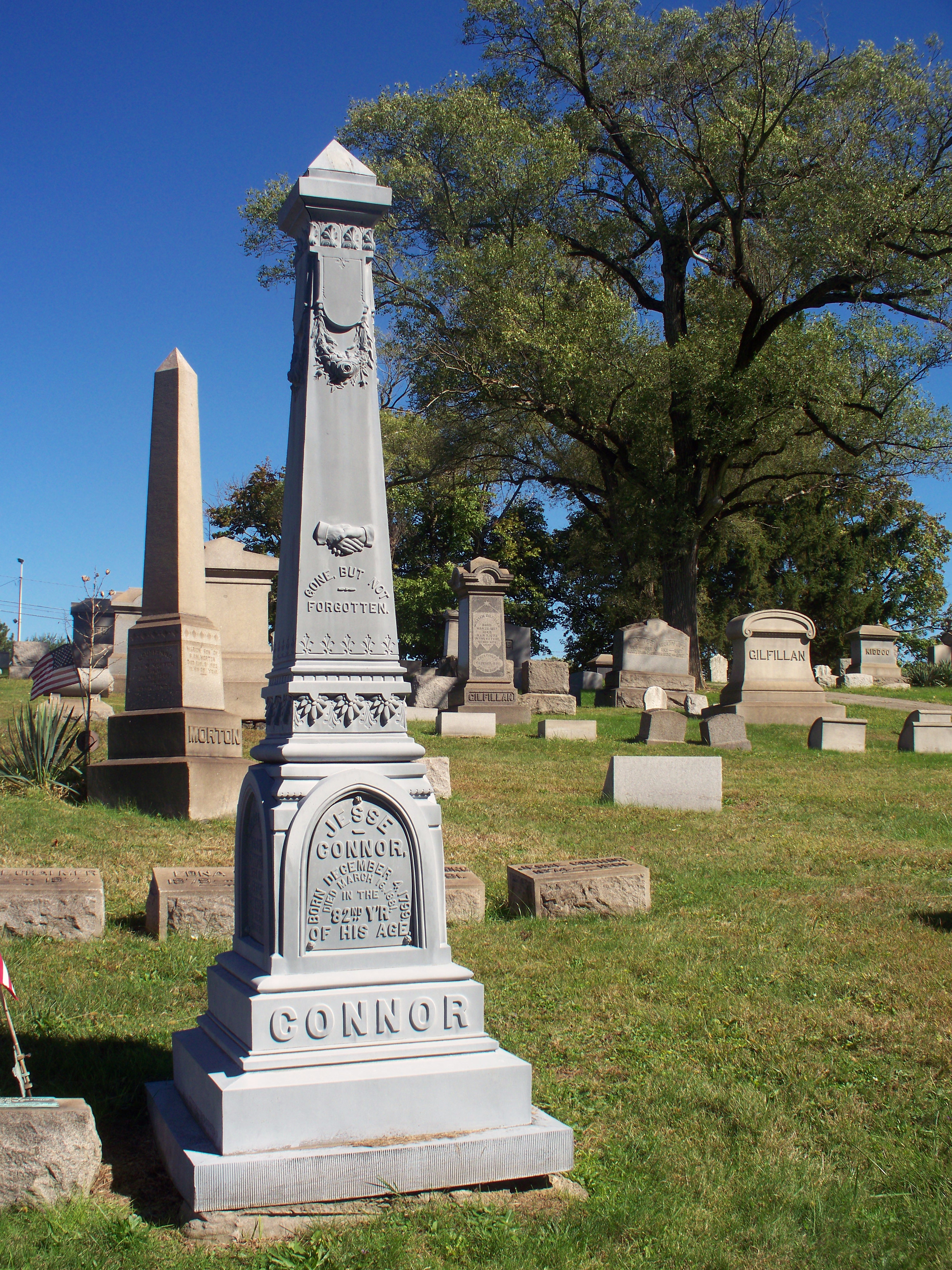
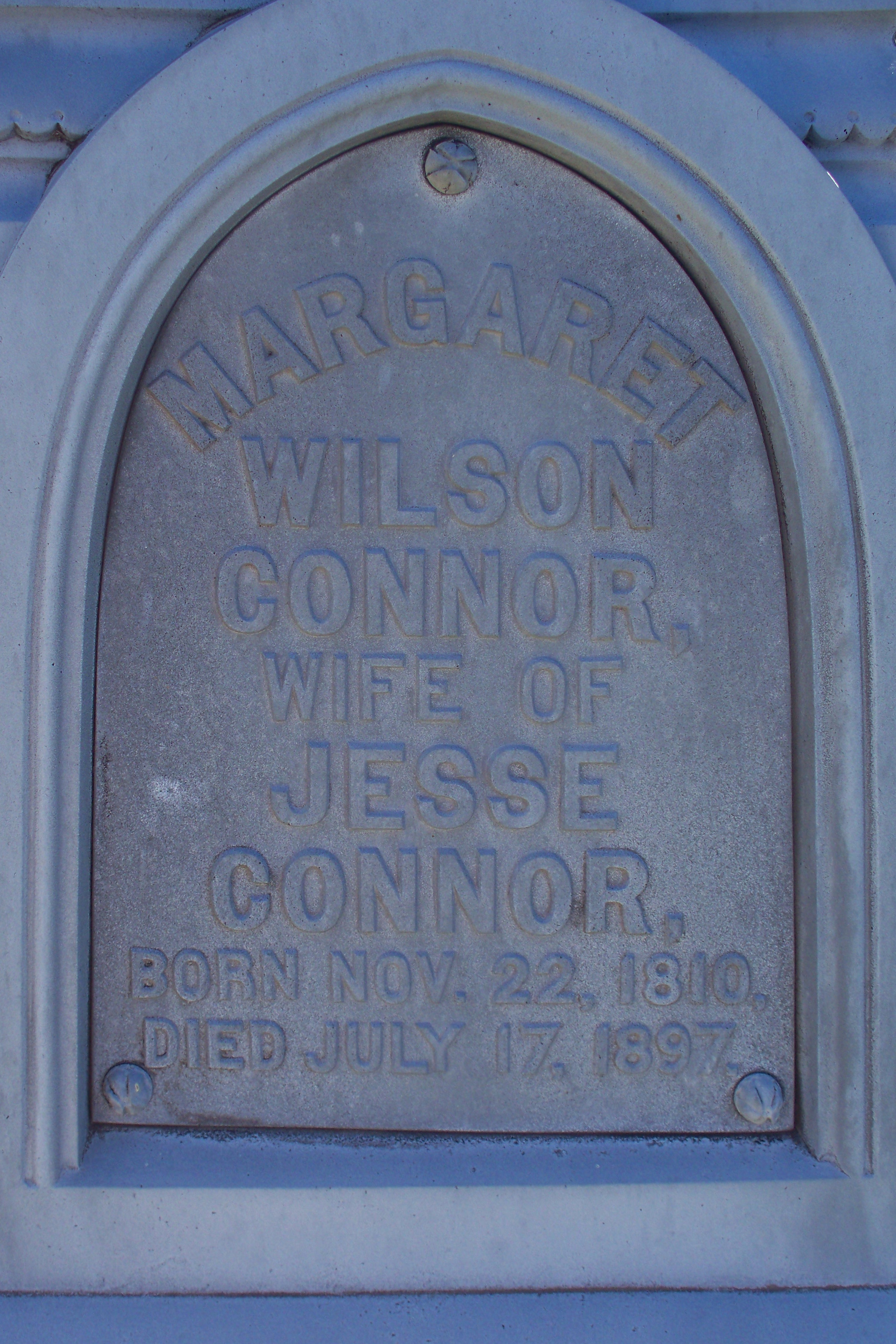
A particularly splendid zinc shaft, well preserved even by zinc standards. This is Style no. 234 from the Monumental Bronze Company.

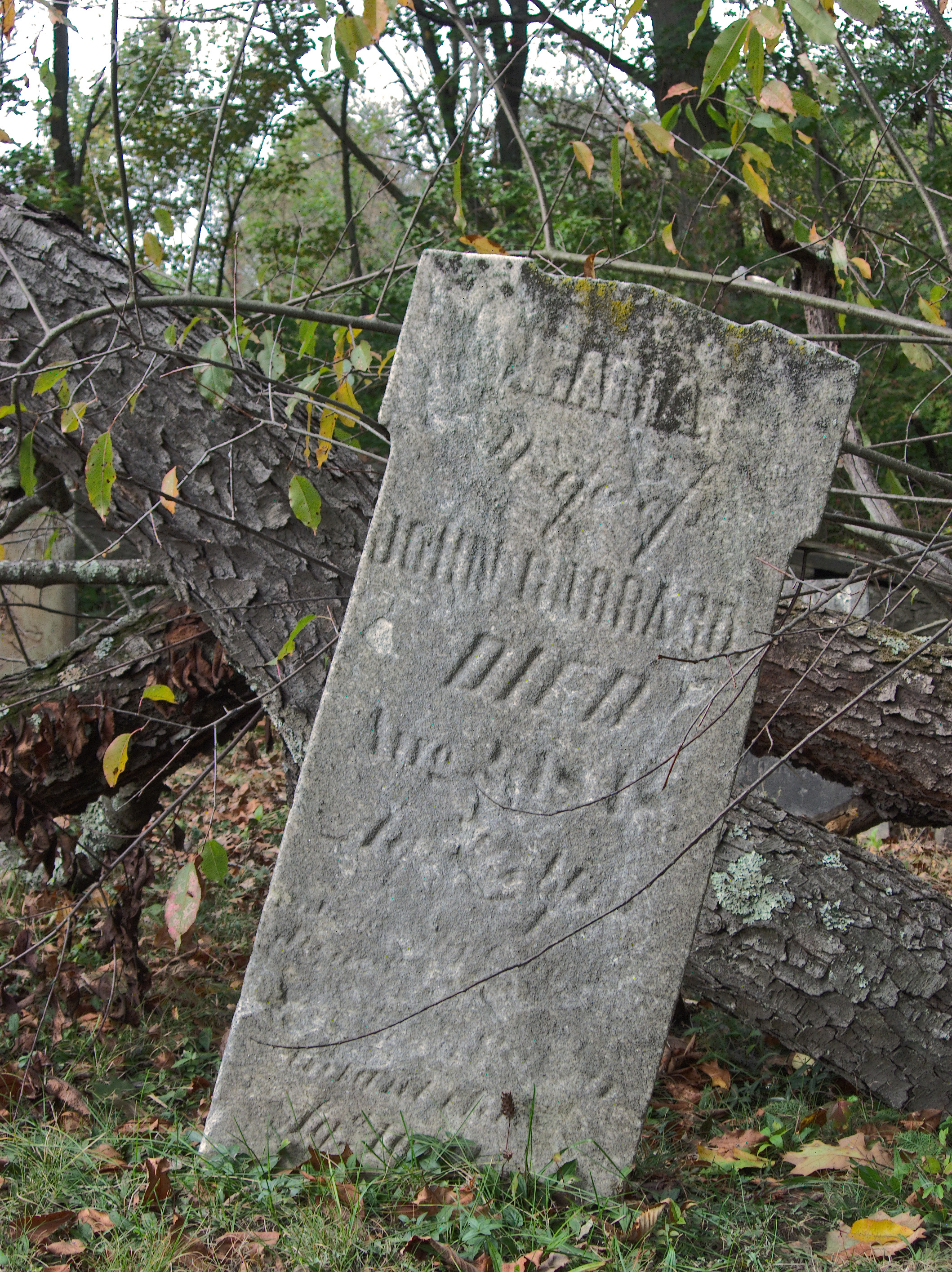
MARIA
Wife
of
JOHN GARRARD
DIED
Aug 2, 1848(?)
Aged ? Yrs.

A good example of what old Pa Pitt calls the “poster style,” with each line in a different style of lettering. The limestone has softened too much for us to read the whole inscription. It looks as though there may have been a second name below the main inscription—perhaps an infant child.
Father Pitt usually makes legibility his priority in photographing old tombstones, but the situation of this one, with the fallen tree behind it, demanded a more artistic treatment.