Pittsburgh Cemeteries

The Art and Architecture of Death

This fine vernacular-Gothic house serves as the gatehouse and office for the Mount Lebanon Cemetery, which was founded in 1901. It’s charmingly out of place in its neighborhood, which is a later development where most of the houses date from after the First World War.

Hidden on the left side of the cathedral is a narrow arm of the churchyard with a few old monuments, with the massive bulk of the Oliver Building towering over them. Most people who visit Trinity Churchyard never find their way to this side of it, but it’s worth a few moments of contemplation.

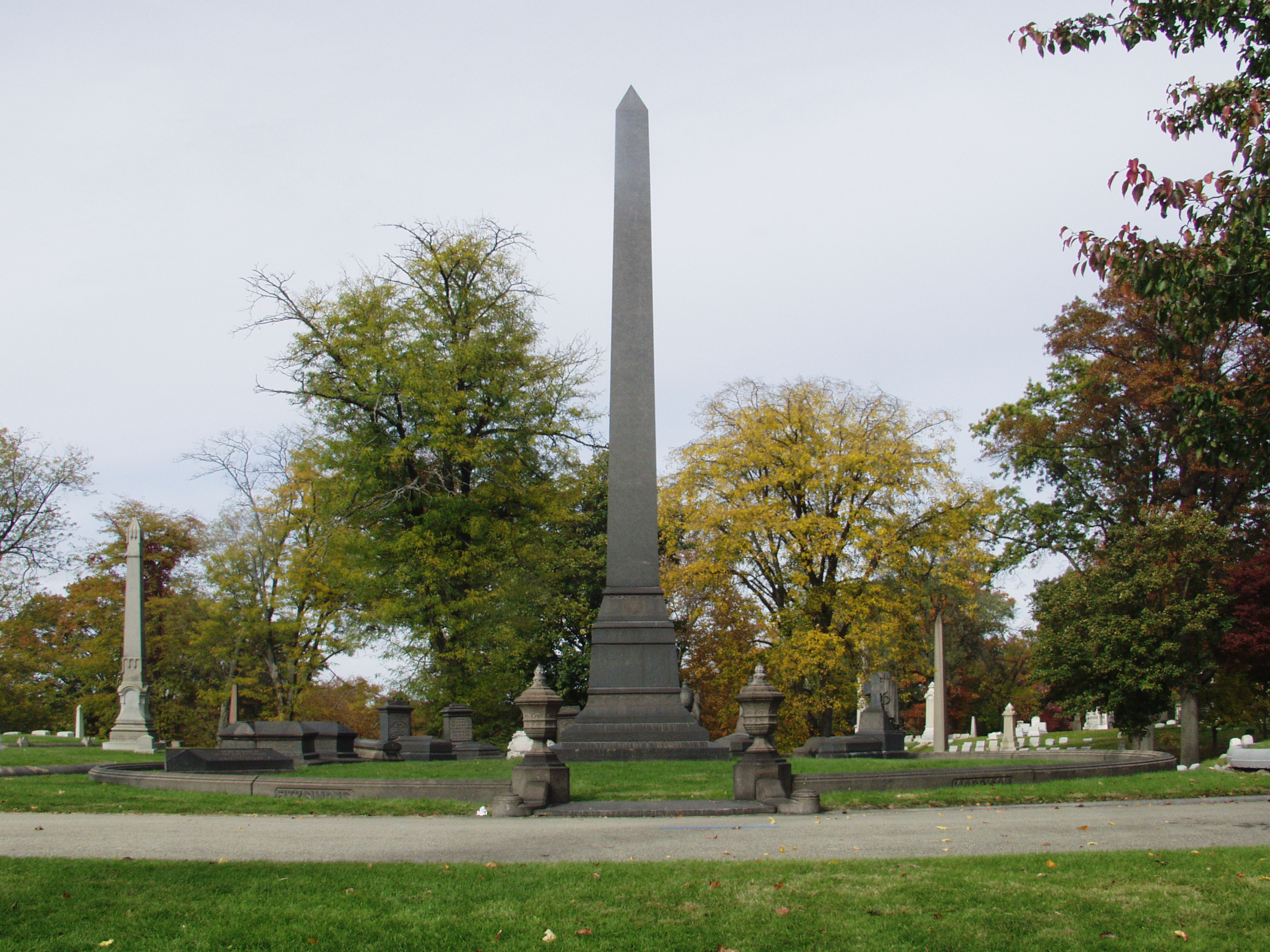
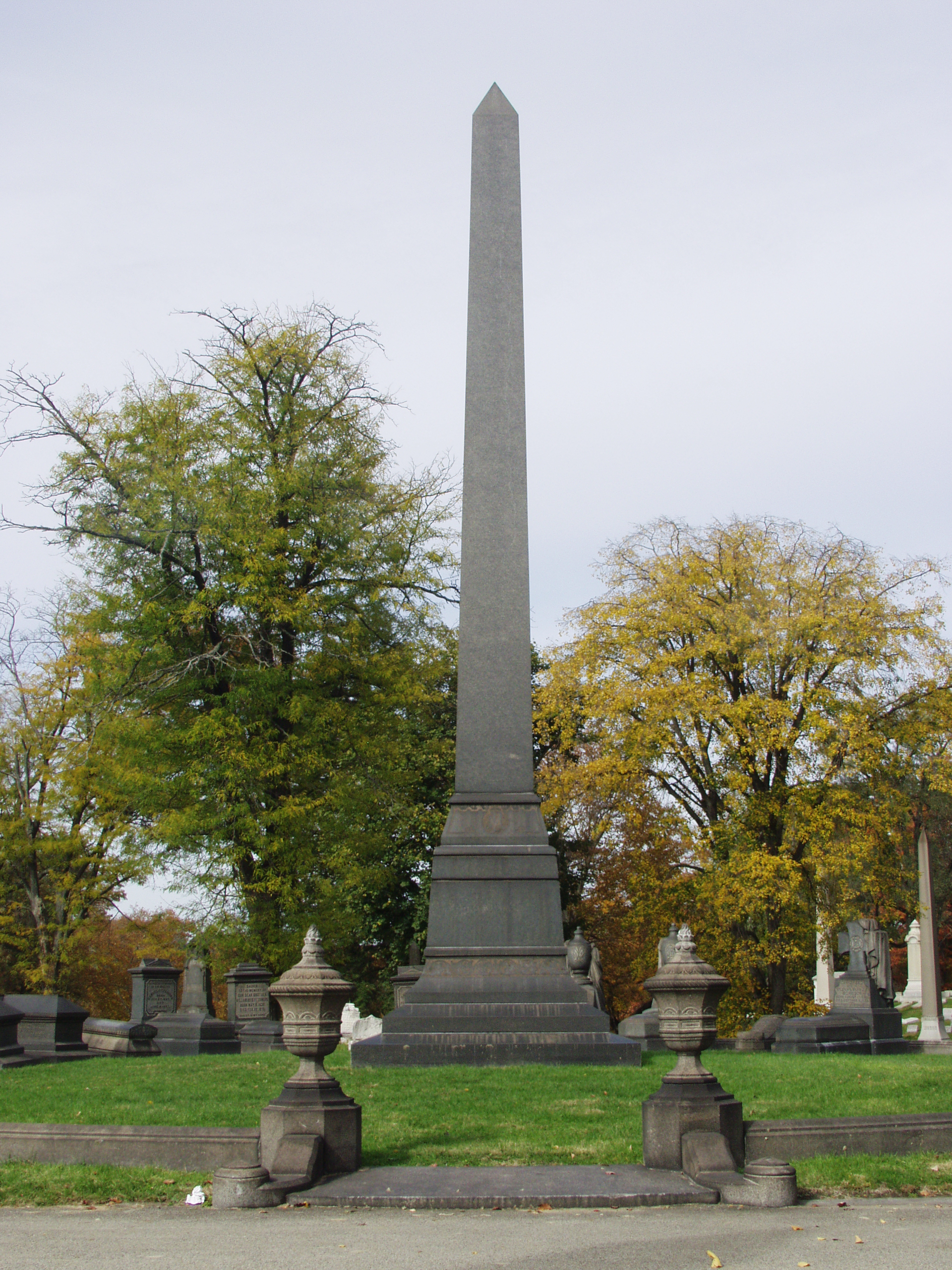
Almost all the walls and fences that used to surround family plots in Allegheny Cemetery have been taken down, but there is an important exception to the rule. In one section of the cemetery are several circular plots where the low stone walls are maintained. Most of them have a central monument with individual graves orbiting it around the edge of the circle; one or two have no central monuments.

The Head plot (above) and the Fitzsimons-Morrison plot (below) are two good examples of the style.

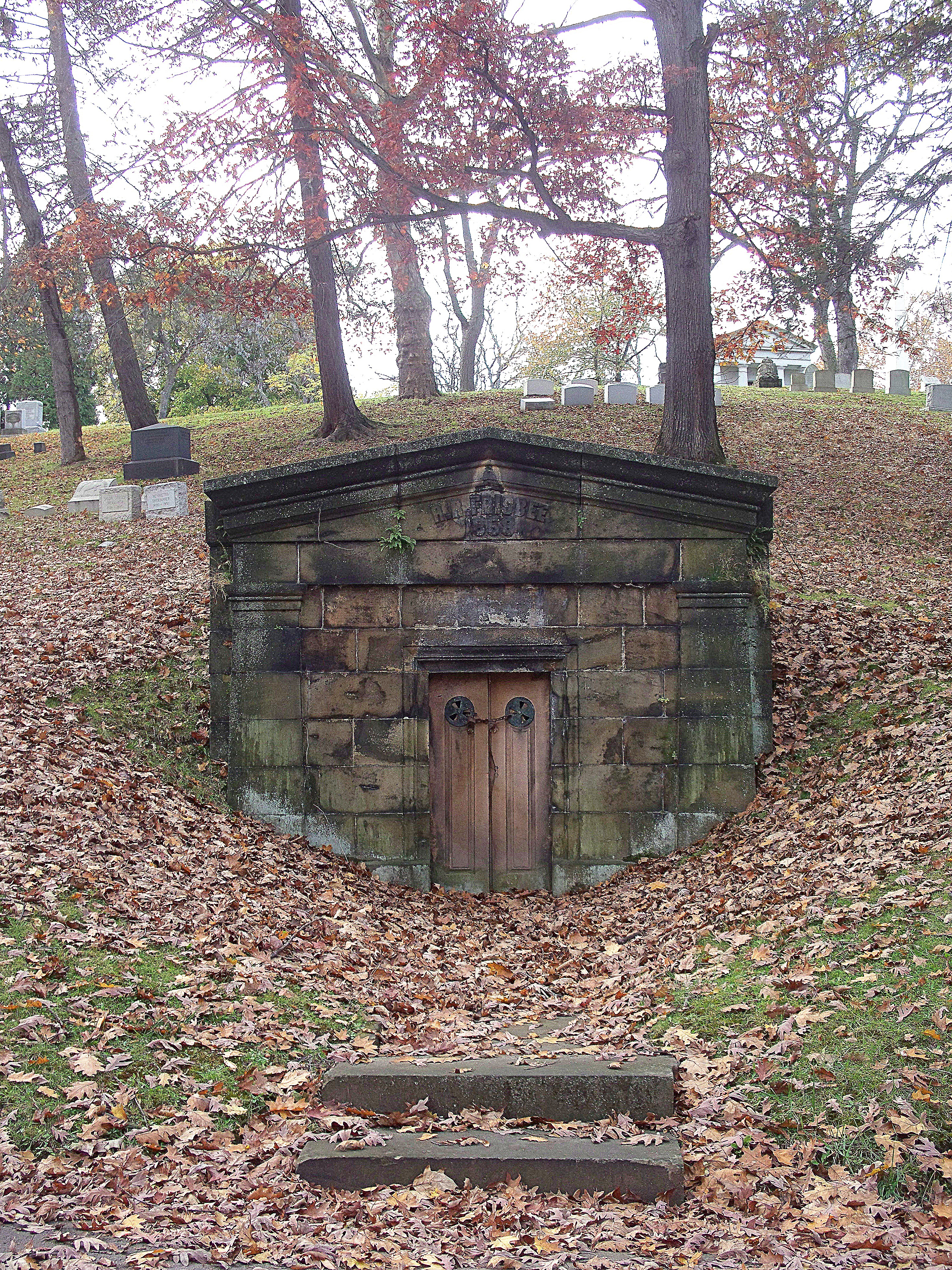
An antebellum burial vault, built in 1858 in a restrained classical style. It looks wonderfully ancient and mysterious when you happen on it back in this woodsy section of the cemetery.

A row of Haxes and McCulloughs rests in front of this angel under identical slabs. C. C. Hax died in 1927, and this monument was put up in 1928 (according to the cemetery’s Web site). The Haxes made their money in leather goods and the McCulloughs in electric equipment, so this was what you would call a mixed marriage.

HERE
RESTETH IN GOD
CHRISTINA WEGL
WAS BORN 23 MAY 18—
DIED 23 DEC. 1811

[The birth date is obscured in the picture. Sorry about that.]

Is “amateur” the word we are looking for? There are tombstones in the Brush Creek Cemetery that are remarkable works of folk art—and then there are these, some of which appear to have been made by craftsmen who were quite good at scratching letters in stone, but none of which seem to rise to the level of professional stonecutting.

There were a fair number of Germans among the early settlers. Some of the families have some of their tombstones in English and others in German. Father Pitt earnestly solicits corrections to his German translations.

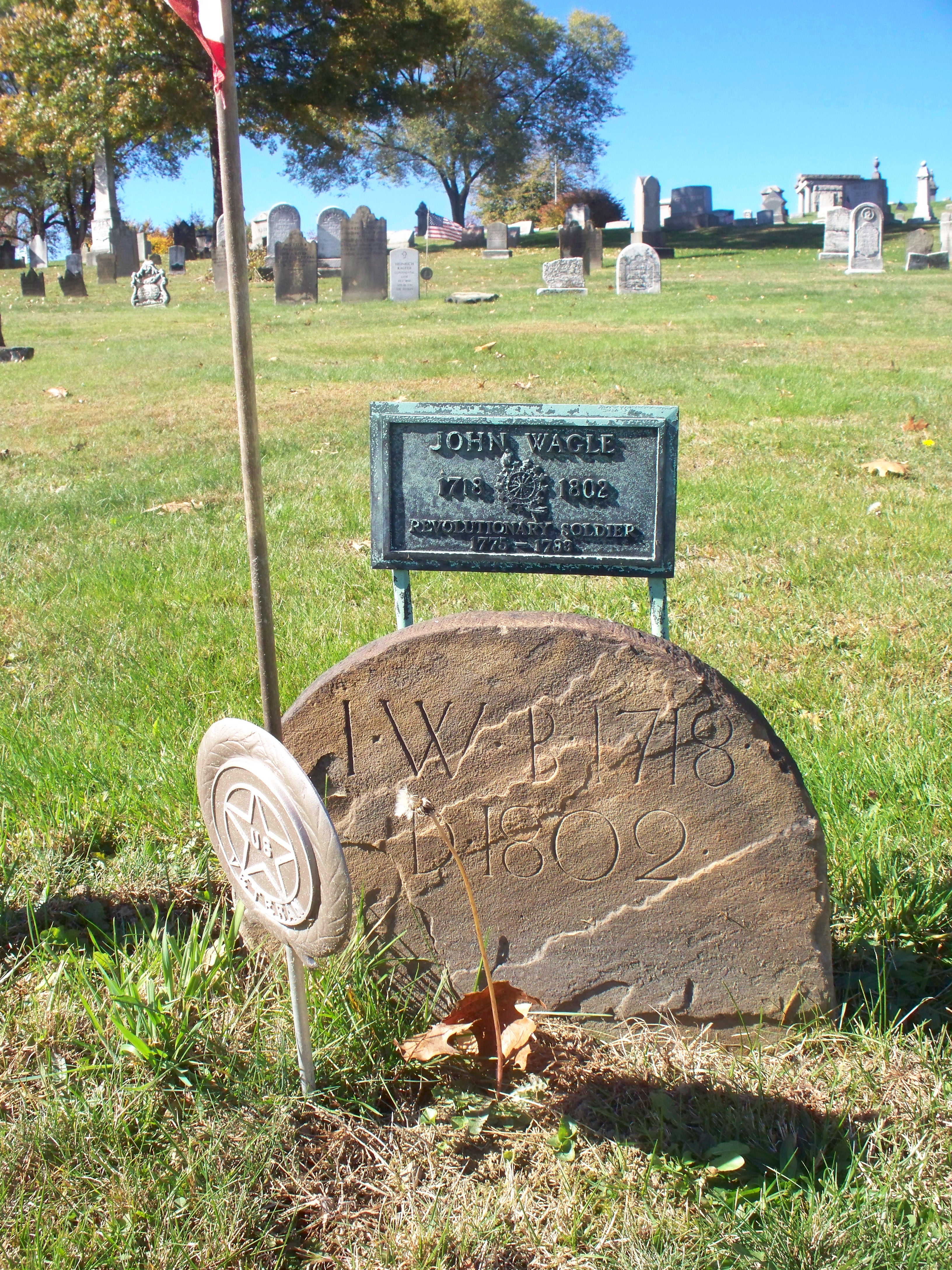
J. W.
B. 1718
D. 1802

The plaque gives the name of this Revolutionary War veteran as John Wagle; he is buried near Christina Wegl, and Wagle and Wegl are almost certainly different ways of spelling the same name.

IN
MEMORY
OF
PHILIP SMITH
HE WAS BORN 1743
AND DIED 1824
AGED 76

HERE LIES
LUDWIG KAEMMERER
DIED JANUARY
21ST 1808 AGED
90 YEARS

Old Pa Pitt is assuming that the line over the M indicates a doubled letter.

HERE LIES
MAGDALENA
KAEMMERIN DIED
JUNE 12th IN THE
YEAR 1794 AGED 26

If this was installed when Magdalena died, then this is one of the earliest legible tombstones in the area.

IN
MEMORY
OF
LUDWIG
KEMERER Junr. HE
WAS BORN AD 1749
DEPARDET THIS
LIFE 1817 AGE —

This seems to be the work of the same stonecutter—perhaps a family member—who did the two German stones above. Note the different spelling of “Kemerer” in English.

HERE LIES
J. CONRAD SCHIDLER
HE & ELISABETH HIS
WIFE BORE 10
CHILDREN HIS PARENTS
ANDREAS & MARGARET
HE DIED APRIL 20th
1796 AGED 58 YEARS
Text John Chap. II V. 25

PAUL EBERHART

ELISABETH
LINSENBIGLER

A Doric mausoleum with rusticated stone: a very common sort of design, but very dignified, and much more picturesque when we add autumn leaves. The stained glass inside is a standard design from the catalogue.

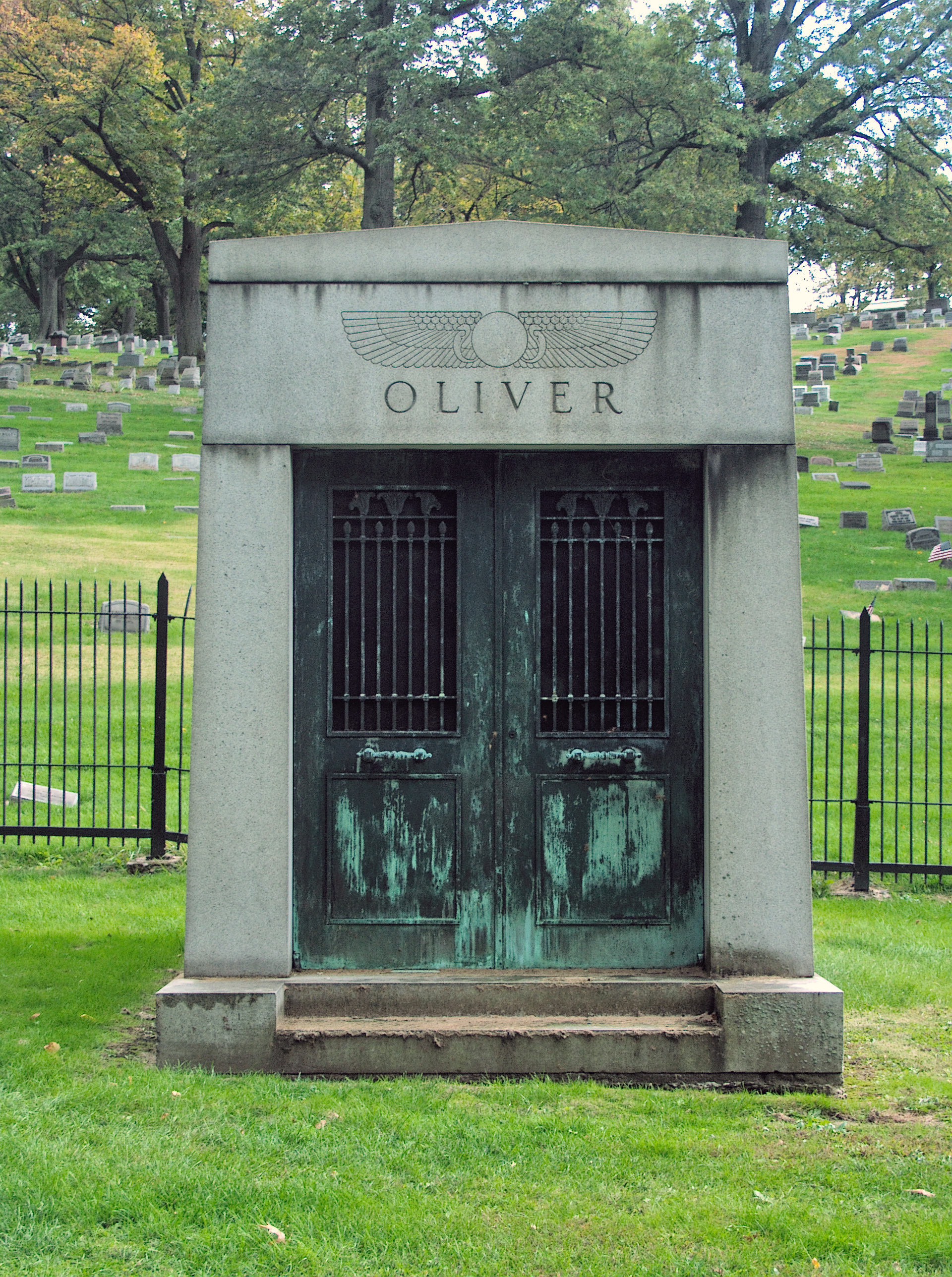
Here is the very last gasp of the Egyptian style. The mausoleum is thoroughly modern and simple, but still has the shape and winged sun disk to show that it is meant to be Egyptian.

With bonus deer. This exceptionally grand monument is in the most romantic interpretation of the Gothic style. Although C. W. Robb lived until 1892, from the style Father Pitt is almost certain that this was put up when his wife Caroline Amelia died in 1869. C. W. married again; his second wife was nearly thirty years younger than he was, and lived until 1936. She shares a small headstone nearby with their daughter, who also died in 1936.

For some reason, Father Pitt suspects that C. W. Robb may have been an organist.

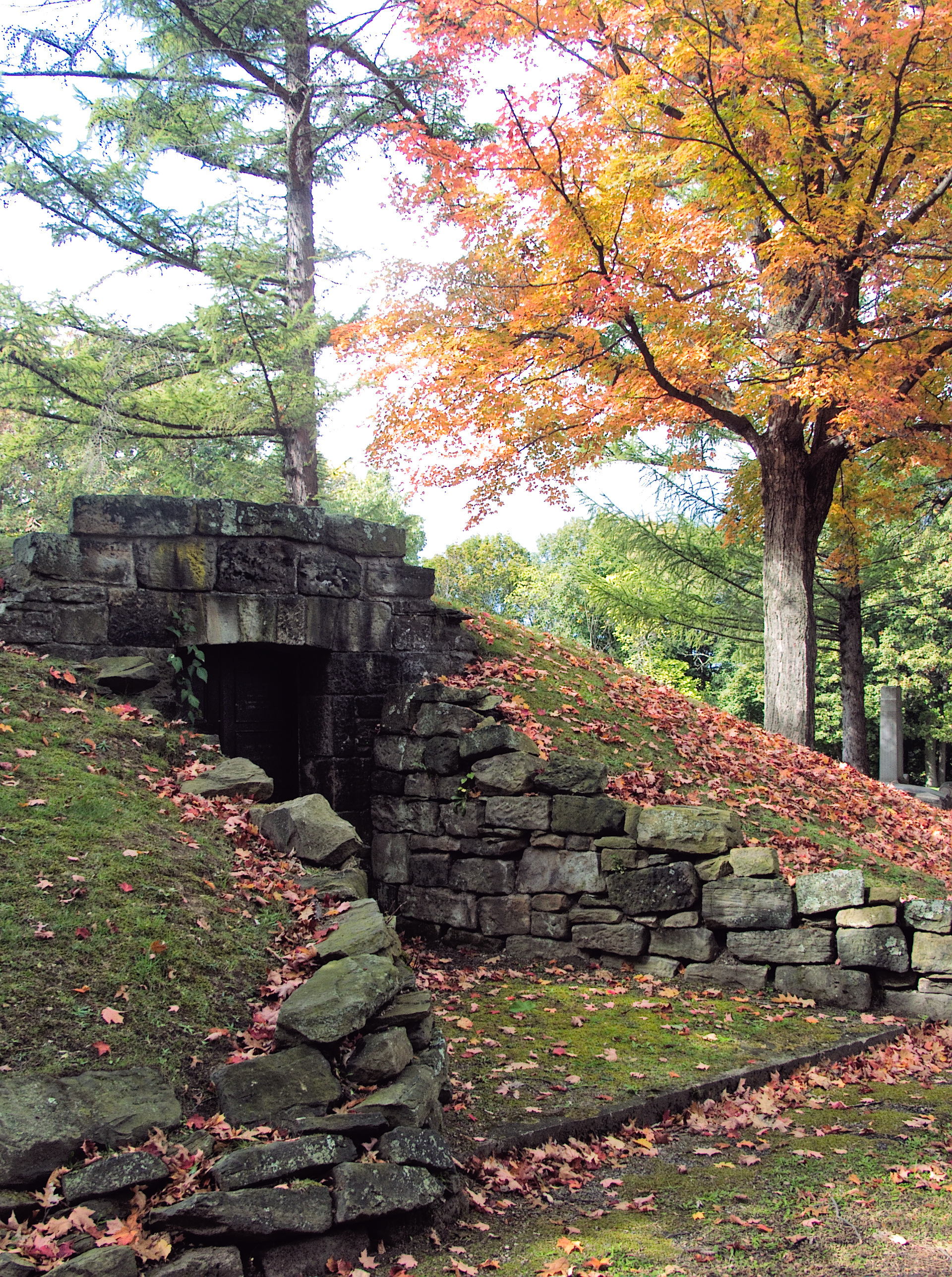
In-ground burial vaults like this had gone out of fashion in most of our cemeteries by the late nineteenth century, but there are two later ones in the Highwood Cemetery. This one, with its rustic stone, is indescribably picturesque and looks like a relic of some vanished ancient culture, but it probably dates from about 1880.