Pittsburgh Cemeteries

The Art and Architecture of Death

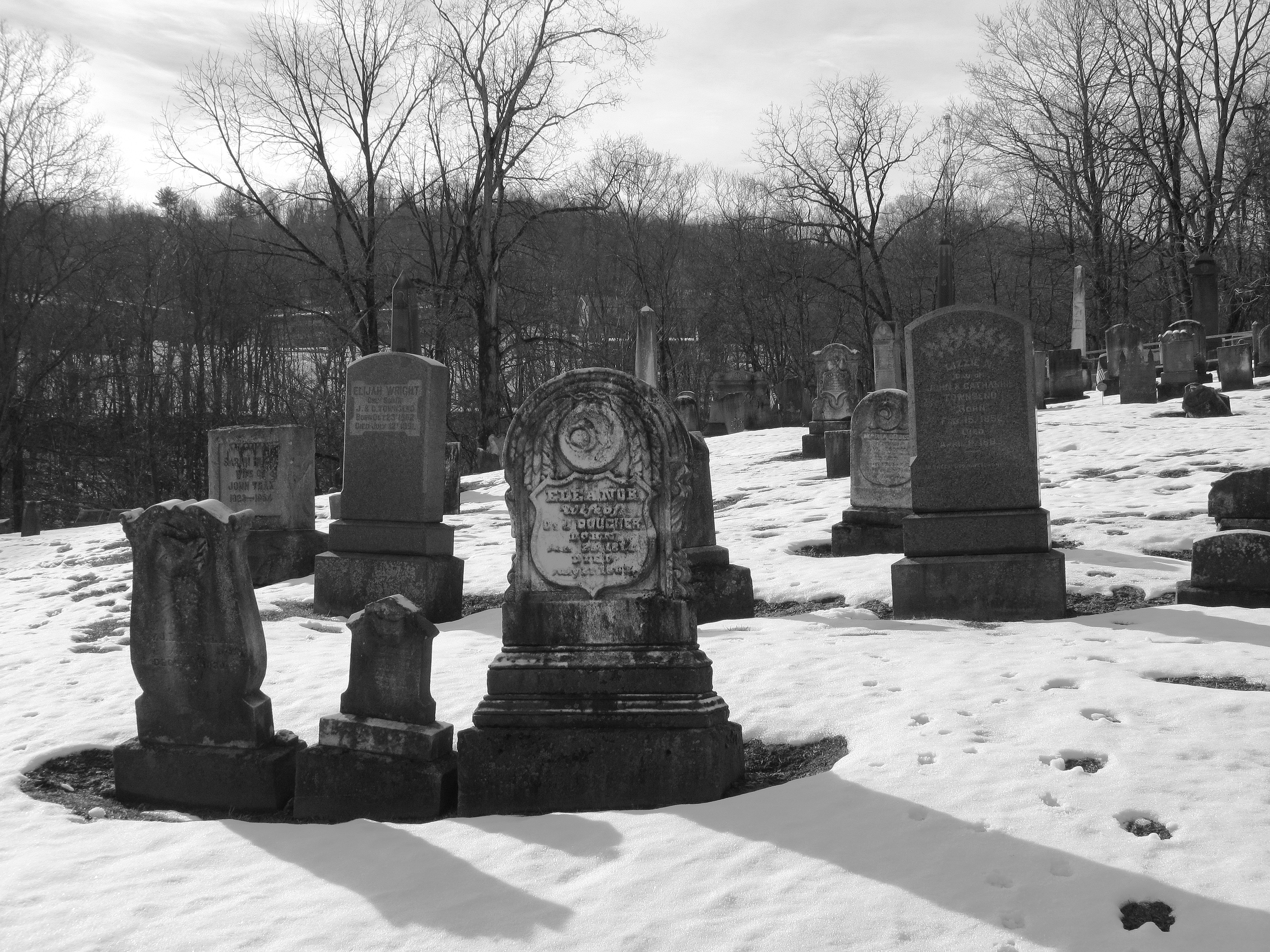
This plot includes the tombstone of the Rev. David Philips, minister and Revolutionary War captain; clearly it belongs to a family of some influence, and it is still kept separate from the rest of the cemetery by a metal railing of comparatively recent vintage (which is to say within the past century).

Captain Philips, who fought in the Revolution, lived to see the fiftieth anniversary of American independence. He is identified as Revd. Philips on his tombstone, and he is buried in the Philips family plot, which is still separated from the hoi polloi by a metal rail. From this one stone we identify a new Master in our collection of folk artists who produced tombstones here two centuries ago: the Master of the Curly Numerals, identifiable by the curled decorations on his numbers. Note also the fine curly script of “The Revd.”

This is the burying ground of a Baptist church that dates back to Colonial times: it claims a foundation date of 1773. Some Revolutionary War veterans are buried here.

A typical Doric mausoleum made exceptional by its picturesque setting on a hill.

A large Doric temple near the entrance to the cemetery. It is very much a gentleman’s mausoleum: it is most distinguished by its lack of distinguishing features, concentrating instead on getting every detail of the style perfectly correct.

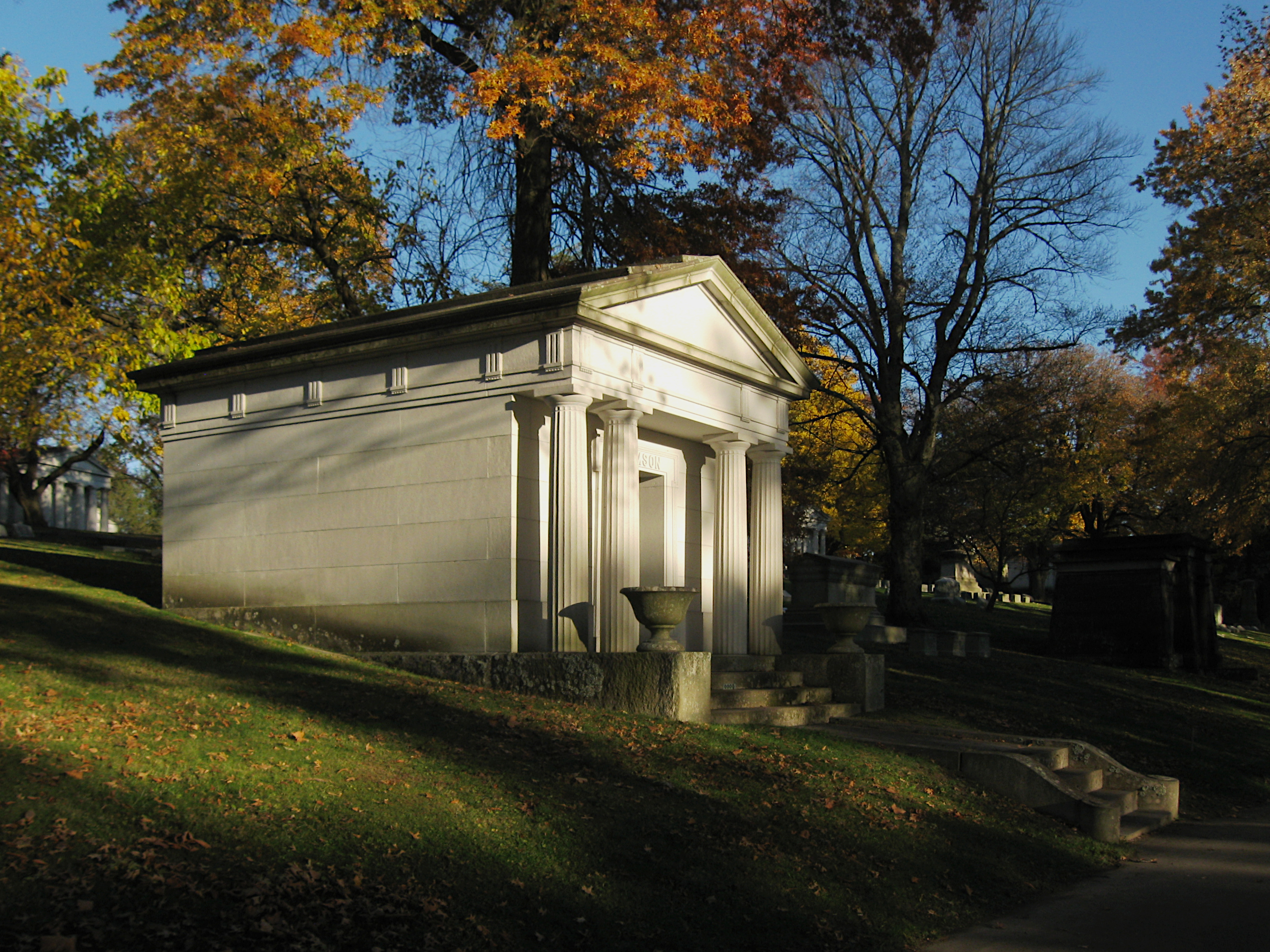
A small Doric mausoleum distinguished by its arched doorway, rare in Doric mausoleums in Pittsburgh. (Old Pa Pitt has a backlog of cemetery pictures with fall colors, so don’t be surprised to see more of them this winter.)

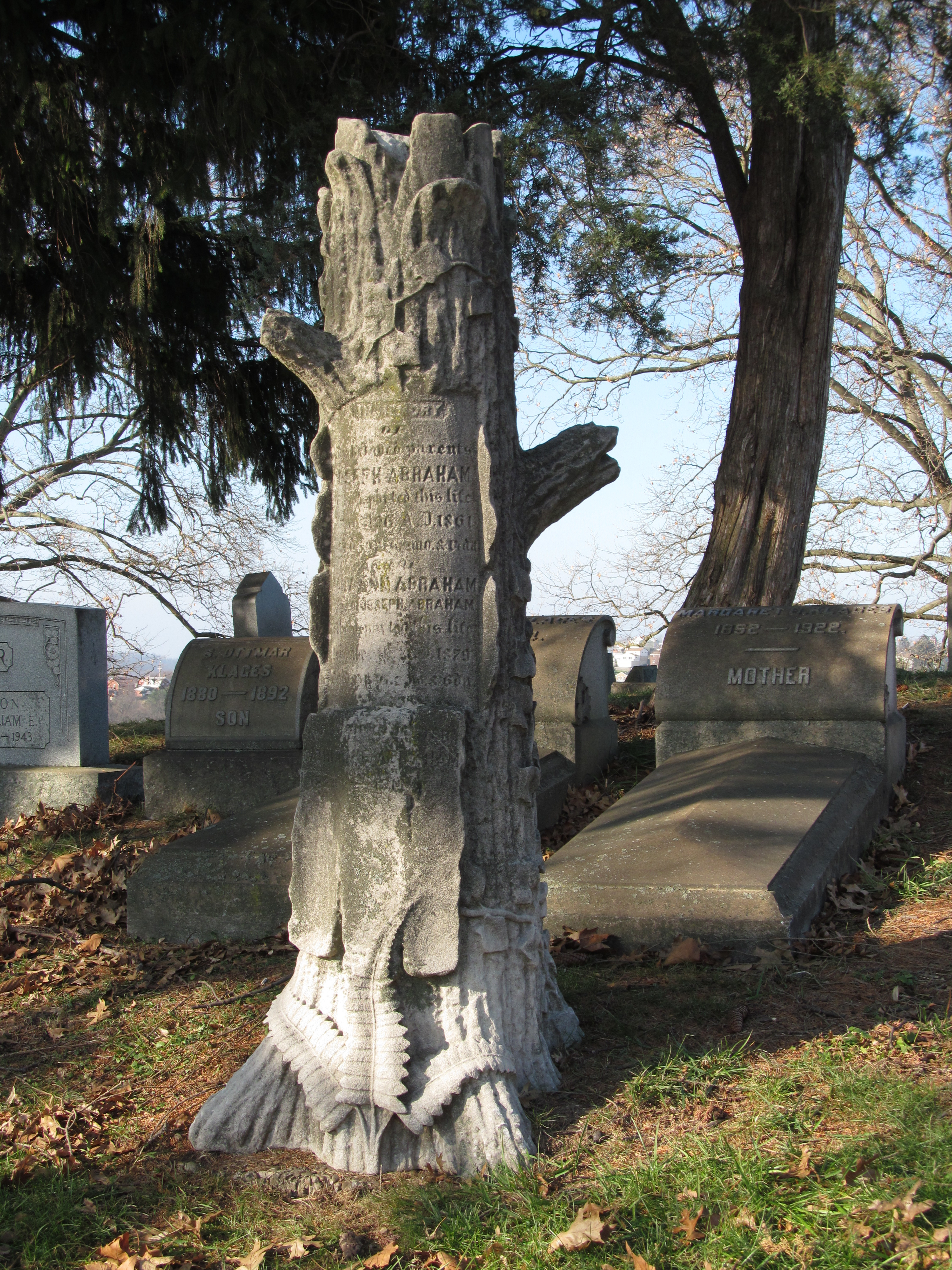
A sumptuous stump with peeled bark for the inscription and a bonus fern. Joseph Abraham died in 1861; his wife Mary Ann died in 1879, and the stump probably dates from then or later.

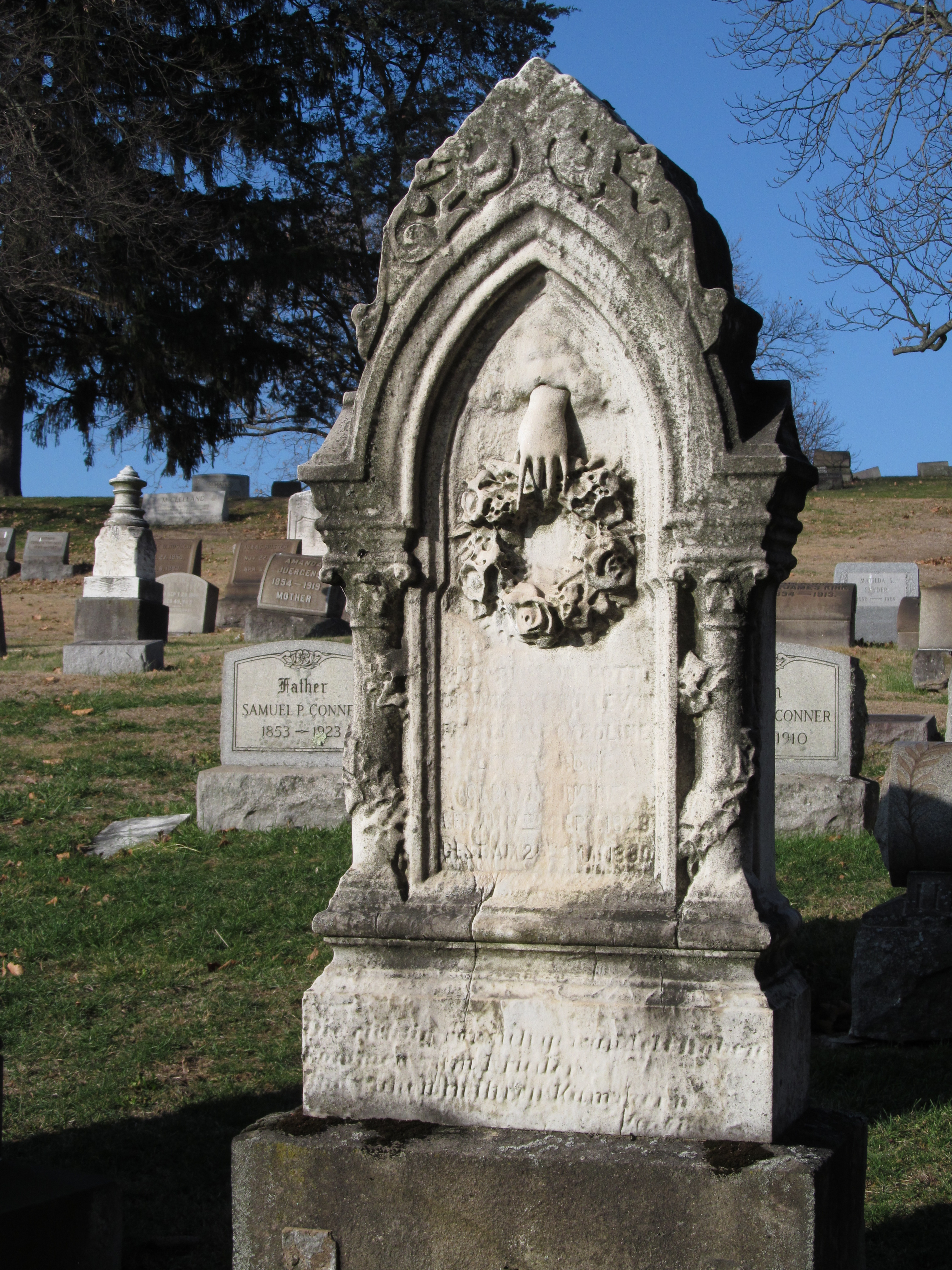
This still-splendid Gothic headstone has eroded to the point where the name is illegible, at least in this light. We can just make out “Hier ruhet in Gott” as the first line, and at the bottom a birth date of 1829 (or perhaps 1828) and a death date of 1880. On the base is an epitaph that might almost be legible in different light.

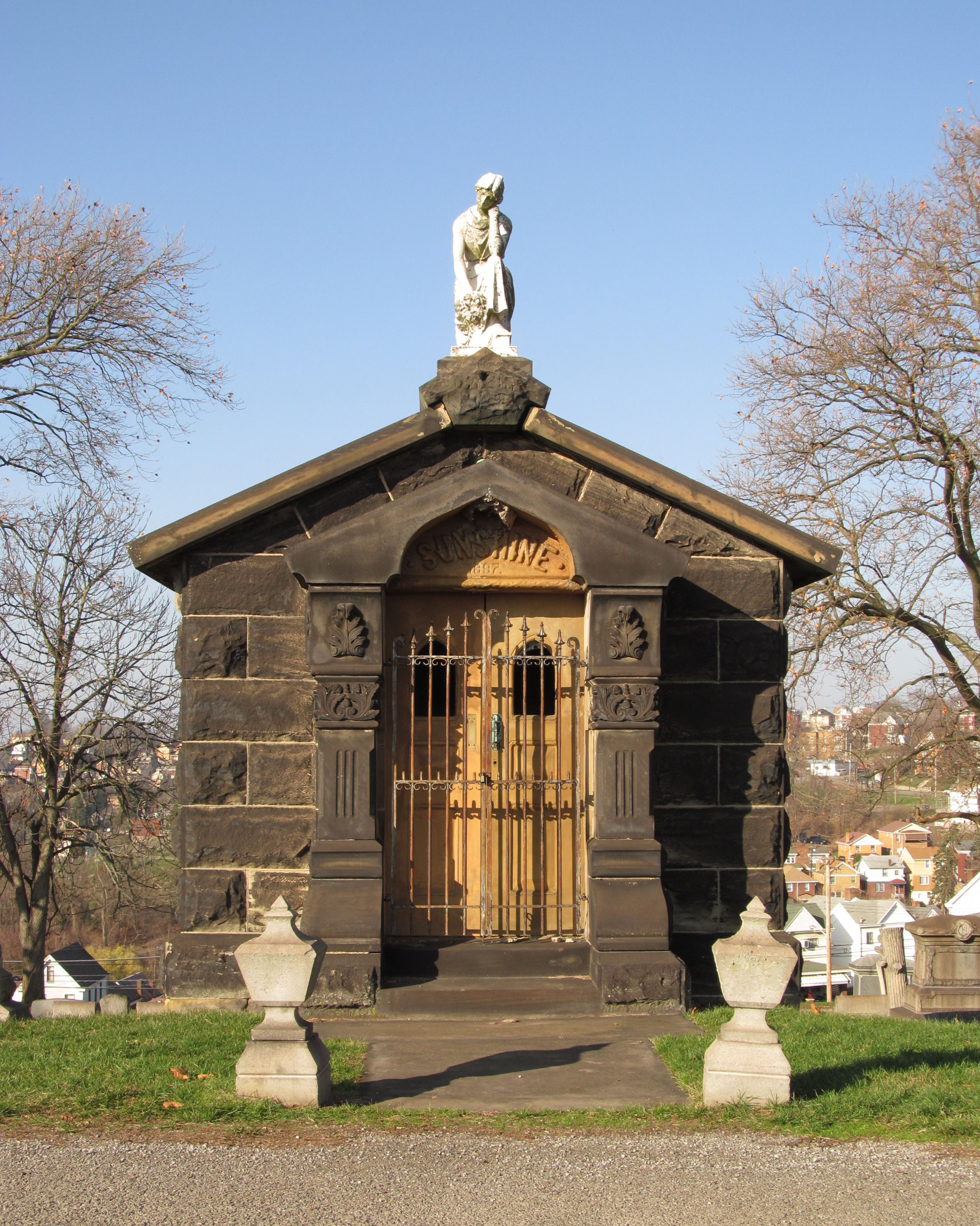
Golden winter sun illuminates the Sunshine mausoleum in the South Side Cemetery.

A large rustic mausoleum with medievalish columns. Like most mausoleums in this cemetery, it has lost its bronze doors, but unlike the others it has not been closed off with concrete blocks. It probably provides shelter for occasional homeless guests, and if old Pa Pitt had a mausoleum he would approve of that use.