Pittsburgh Cemeteries

The Art and Architecture of Death

Face on the Potts monument

The weathered face of this mourner looks all the more contemplative for the eroded vagueness of her features. The names of the various Pottses are inscribed on a broken column, a common metaphor for death in cemeteries. The various parts of the monument seem to have been ordered separately and with little regard for consistent style; we know from seeing her in other cemeteries that the flower-strewing mourner (whose hands always break off) was a standard catalogue item, and the classical column seems an odd match for the rustic base.

We have featured this mausoleum before, but surrounded by the splendor of fresh June greenery it makes a very attractive picture.

Jacob Minsinger Monument

A substantial classical monument that may date from 1933, when Jacob Minsinger was buried (under a separate ledger); but the style suggests that it could be older, and might have been bought while Jacob was alive in anticipation of the eventual need for it.

Robb monument

A tasteful obelisk with a simple classical base. The stark Gothic letters of the inscription are typical of the era.

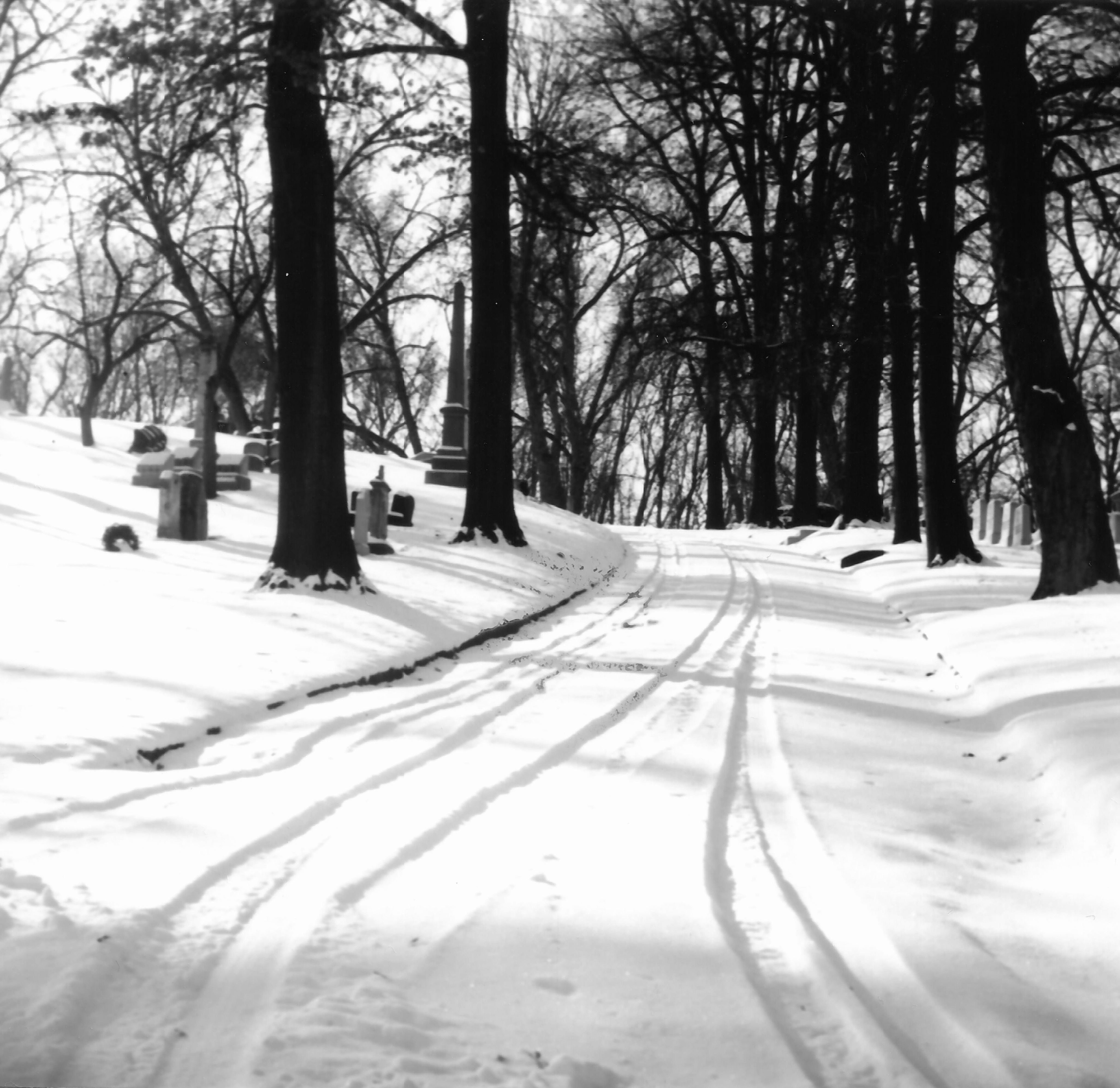
Pictures taken in the Allegheny Cemetery in January of 2000. The camera was an Argus 40.

A winter view of this charming vernacular-Gothic house that serves as the office for the cemetery.

James Boyer died in 1889; there seems to be plenty of room for other inscriptions here, but none added yet.

This monument was probably put up when Sarah Ann Maits died in 1904. John Maits, born in 1830, has no death date filled in; if he is not still alive, he may have married again (at an advanced age, since he was 73 when Sarah Ann died) and been buried elsewhere.

Merry Christmas

- Posted in Mount Lebanon Cemetery by with comments

The Soffels always decorate their mausoleum in Mount Lebanon Cemetery with a wreath for Christmas.

A newly identified work by the Master of the Robinson Run Reliefs, all of whose trademarks are visible here: the thistle decoration flanked by flowers, the fan patterns in the corners, and even the curled tail on the top of the lower-case g in age. Henry Huls was a private in the Revolutionary War; he is identified here as having served in the Washington County Militia, but that could only have been in the last few months of the war, since Washington County itself was formed in 1781.